
Permeable Pavers Vs. Standard Pavers
Why the choice matters more than you think.
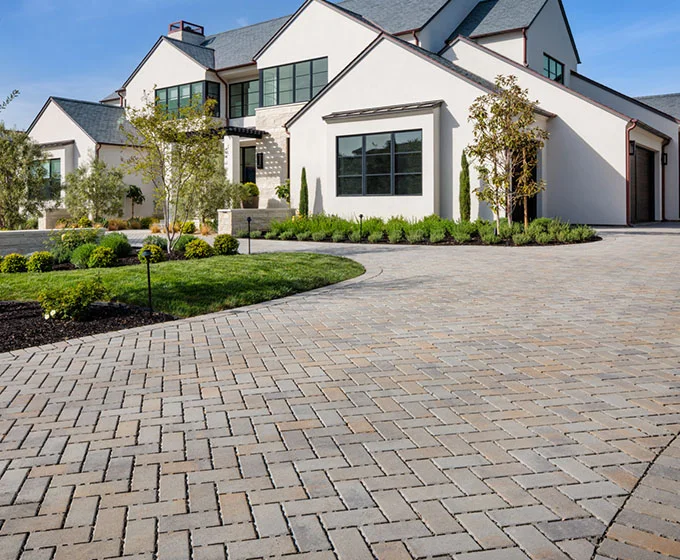
What are Permeable Pavers?
Permeable pavers are designed to allow water to pass through the joints between the stones and filter into a specially prepared base beneath. Instead of shedding water across the surface, permeable systems absorb and manage rainfall naturally.
A permeable system typically includes:
- Individual pavers with wider, gravel-filled joints
- A bedding layer of clean, angular stone
- A deeper base layer designed to store and slowly disperse water into the soil
This layered structure allows the surface to remain stable while actively managing drainage.
Permeable pavers differ from traditional concrete pavements because they contain more gaps to allow stormwater runoff to drain more effectively. They come in a wide variety of materials which are cut into square or rectangular shapes.
With permeable concrete pavers and permeable grass pavers, any rain that falls on your patio, walkway or driveway seeps back into the ground, reducing the burden on storm drains. A permeable paver system can even be designed to harvest and recycle rainwater.
Hardscaping is an Investment
The materials and methods you choose today will affect how your space performs for years to come.
Permeable pavers offer a solution that works with nature rather than against it—managing water efficiently, protecting the integrity of the installation, and creating outdoor spaces that are built to last.
Whether you’re installing a driveway, patio, or walkway, considering permeability is one of the smartest decisions you can make for both performance and longevity.
The Drainage Advantage of Permeable Pavers
One of the biggest benefits of permeable pavers is their ability to manage water naturally. Instead of concentrating runoff into specific areas, permeable systems disperse water evenly into the ground. This helps prevent standing water, reduces icy surfaces in winter, minimizes erosion and washouts and reduces the need for additional drainage infrastructure. For climates like Whistler and Pemberton which have heavy freeze-thaw cycles, this type of system is highly advantageous.
Durability
Water is one of the primary causes of hardscape failure. When water pools, freezes, or erodes the base layer, surfaces can shift, crack, or sink over time. Permeable pavers help extend lifespan by reducing water pressure beneath the surface, preventing freeze-thaw damage and maintaining a more stable base. Traditional impermeable surfaces often experience more stress because water has nowhere to go except across or under the surface.
Environmental Benefits
Permeable pavers benefit Homeowners by helping build sustainable landscapes that reduce erosion that occurs when grass is dry or dead, as well as eliminating standing water on the surface where mosquitos can breed. Builders who install concrete permeable pavers may be eligible for LEED credits for contributing to stormwater management. The erosion control prevents debris from getting into local rivers or other bodies of water.Other eco-friendly features include the prevention of pooling water and pollutants. By promoting water flow, pollutants have fewer opportunities to contaminate water.
Lets chat about Permeable Paving Solutions
If you are interested in how a permeable paver solution could benefit you and your property, reach out.